


Organisations contemplate Microsoft outage effects
Organisations contemplate Microsoft outage effects

Caroline Robinson - South WestTue, November 17, 2026 at 6:10 AM UTC
0
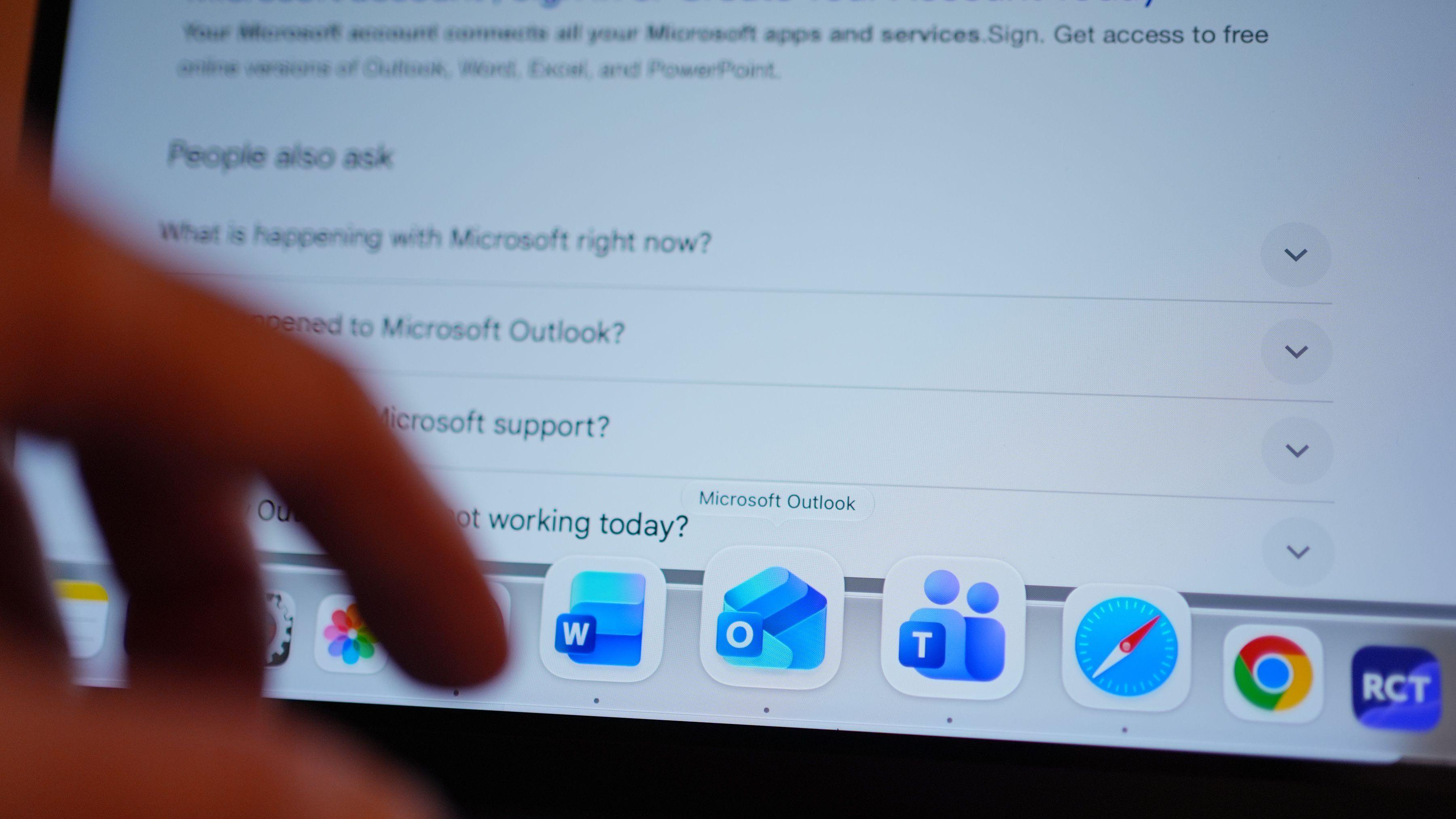
Teams, Outlook and AI software Copilot were affected during the outage
Businesses, pharmacists and technology experts in Devon and Cornwall have been reflecting on the impact of disruption experienced during a national Microsoft outage.
Microsoft's Teams, Outlook and AI software Copilot systems were affected in more than 70 countries on Friday, with it taking more than 20 hours to solve. The tech giant said it was deeply sorry, adding it had not been "related to cyber or AI/agents" and was the result of an "earlier network capacity upgrade".
Nick Kaye, a superintendent pharmacist in Newquay, Cornwall, said the outage showed how important "face-to-face" care was.
"Technology is great, it definitely improves efficiency but it definitely improves reliance as well and therefore weaknesses.
"That face-to-face care when the technology falls over, or people are digitally disadvantaged, is something really key to bear in mind."
He added he thought community pharmacies "generally coped really well" but there would be a backlog caused by prescription requests over email.
'Eliminate the risk'
Phil Norgan, a residential lettings manager from Par, Cornwall, said he experienced difficulties with paperwork.
He said he was involved in two tenancies due to move forward on Friday but, because everything was signed electronically, parties were unable to prove agreements had been signed.
Advertisement
He said: "This would have been a massive headache for a lot of letting agents and sales agents.
"We're so wholly reliant on technology that we need to think how we work... and maybe plan ahead and look at possible reasons to why something might happen, and try and eliminate the risk."
'Plan for failure'
Dr Rory Hopcraft, a lecturer in cyber security at the University of Plymouth, said Friday was a "true test" of business continuity plans and disaster recovery plans.
He said: "I think the biggest lesson we need to ask ourselves is: 'What happens when the technology that we rely on becomes unavailable.'"
He said, for a business, that might look like using paper and a pen, or ringing people rather than emailing them, and for the everyday person using an "old-fashioned diary" to keep contact information or apportionment information.
"Ultimate, technology is beneficial, but we also need to plan for its failure," he said.
Dr Alex Taylor, from the University of Exeter, said it would be a challenge to mitigate against similar problems in the future because each time they were slightly different, so it was a "continuous kind of learning curve".
He added that a suggestion he heard from people in the field was "instead of moving everything to the [internet] cloud, we should be bringing some sort of data services and platforms back to on premise sort of office blocks instead, just because you've got more of a diversity of data storage options then."
Follow BBC Cornwall on X, Facebook and Instagram. Follow BBC Devon on X, Facebook and Instagram. Send your story ideas to spotlight@bbc.co.uk.
-
South West: Recovery after Microsoft outage
Microsoft says it is 'deeply sorry' for global outage after almost 24 hours of disruption
Hospitals, GPs and police hit by Microsoft outage
Related internet links
-
University of Plymouth
University of Exeter

Source: “AOL Money”
